Want to be in the loop?
subscribe to
our notification
Business News
ENORMOUS ROOM FOR VIETNAM LOGISTICS GROWTH
According to Mr Thanh, by becoming a member of the ASEAN Economic Community (AEC) and participating in numerous free trade agreements of the new generation such as: the Trans-Pacific Partnership Agreement (TPP), the Vietnam-EU Free Trade Agreement (EVFTA), Vietnam was on the way to become a processing centre of the world; trade volume in ports enjoyed sustainable increase (reached 427 million tonnes and 12 million TEU in 2015, exceeding expectations), creating a fertile market for logistics. Moreover, Vietnamese businesses were now under restructuring to strengthen domestic and international competition which would drive the demand for logistics higher. Especially, when the TPP takes effect and comes with it the elimination of 18,000 tariff lines as well as non-tariff barriers, goods flows between countries will be given a boost, as well as the opportunity to expand markets and engage in the chain of production and global supply for both Vietnam businesses and FDI enterprises.
However, besides huge opportunities, Vietnam's logistics industry still has some intrinsic shortcomings. According to Mr Scherbey Nestor - Senior Advisor of the Vietnam Trade Facilitation Alliance (VTFA), an overview into the logistics industry of Vietnam showed many limitations, from legal framework, ports, logistics centres, facilities, technology to human resources, infrastructure.
Expressing a different viewpoint from Mr Nestor Scherbey, Mr Bui Quoc Nghia - Director of the Vietnam Institute of Logistics (VIL) said that “the biggest knot” in Vietnam logistics was the infrastructure. Over the years, Vietnam had made much investment to develop the technical infrastructure for logistics but the efficiency remained low, the infrastructure remained underdeveloped (focus too heavily on roads), the quantification from the national, and regional to manufacturing sector level lacked accuracy.
Besides an unsynchronised development of infrastructure, slow technology updates and limited manpower, another reason behind the high cost of logistics in Vietnam was because businesses had yet to have proper awareness about the importance of logistics as well as to develop an interest in using professional services. With current logistics services, domestic enterprises were still mainly self-supply. “This is thought to help reduce costs, but in fact drives the cost higher. The key now is that we need to bring logistics services to each business as it is an indispensable tool for restructuring, improving competitiveness of businesses in the market,” said Mr Nghia.
According to several surveys, Vietnam logistics market currently accounts for approximately 25 percent of GDP - a relatively high rate compared with 10 percent of developed countries and is the direct cause behind the ballooned prices of products, the weak competitiveness of the economy in general and Vietnamese commodities in particular on the international market. According to VIL, there are about 2,000 registered logistics providers in Vietnam, but all are small and medium scale, only capable of providing part of the logistics chain; meanwhile the number of customers in demand of logistics services has climbed to about 300,000. These numbers reflect the incompatibility between logistics development and the number of firms having actual demand for this service. “This limitation needs resolving as soon as possible because only when the demand for logistics increases, can Vietnam logistics market grow strong, which means more competitive cost and prices, bringing practical benefits to businesses as well as the country's economy,” stressed Mr Nghia.
Source: VCCI
Related News
MEMBER CORNER / PROMOTIONS
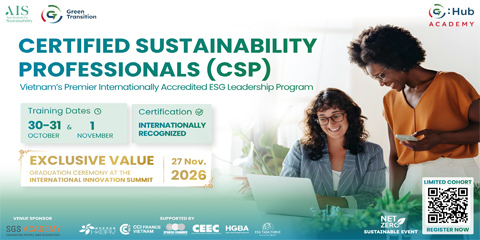
HCMC | CERTIFIED SUSTAINABILITY PROFESSIONAL (CSP) TRAINING | REGISTRATION OPEN
As sustainability becomes deeply embedded in corporate strategy and supply-chain operations across Vietnam, Hong Kong Business Association Vietnam is pleased to endorse the upcoming Certified Sustainability Professional (CSP) training program by the Asia Institute for Sustainability (AIS) - a premier internationally recognized ESG credential in Vietnam.
VIETNAM ECONOMY INVESTMENT
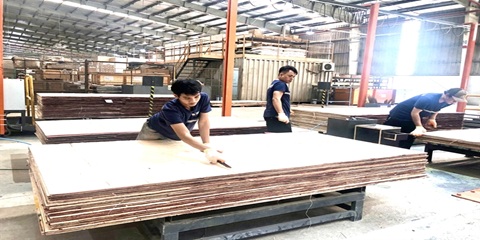
HCM CITY SAYS HOW IT PLANS TO ACHIEVE 10-11% ANNUAL EXPORT GROWTH FOR REST OF DECADE
The southern economic hub aims to strengthen its role as the country’s largest import-export centre while developing into a regional transhipment centre in Southeast Asia, supported by green and digital transformation and a circular economy. HCM City has outlined measures to expand production capacity, cut logistics costs, diversify export markets, and help businesses meet increasingly stringent international standards as it targets average annual export growth of 10-11 per cent through 2030.
VIETNAM ECONOMY INVESTMENT
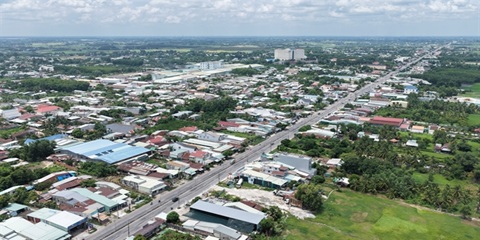
HCM CITY LEADS ECONOMIC RESTRUCTURING IN SOUTHEAST REGION
According to Associate Professor, Dr Vũ Tuấn Hưng, director of the Institute of Social Sciences of the Southern Region, the Southeast is a strategically important socio-economic space in Việt Nam’s development given its advantages in location, industry, trade, services, logistics, science and technology, urbanisation and human resources.
TECHNOLOGY
DIGITAL TRANSFORMATION TURNED INTO PRACTICAL TOOLS FOR PEOPLE, BUSINESSES
Việt Nam is moving its digital transformation agenda beyond policy frameworks and individual technology platforms towards practical applications that address everyday needs, as authorities seek measurable outcomes from science, technology and innovation. Under Politburo Resolution No. 57-NQ/TW issued on December 22, 2024, the implementation is increasingly shifting from simply completing assigned tasks towards developing concrete products and services for citizens and businesses.
TECHNOLOGY
APPLYING TECHNOLOGY FOR ECONOMIC TRANSFORMATION
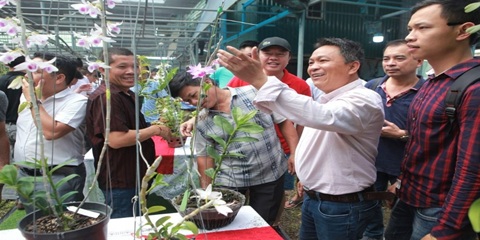
Having completed its new rural development program, Hanoi is shifting its focus toward improving development quality and building smart, sustainable rural areas. The transformation of Dong La orchid-growing village in An Khanh, a western commune of Hanoi, shows how digital technology is becoming a driver of production, market expansion, and higher incomes for local residents.

MEMBER CORNER / PROMOTIONS
VIGLACERA HONORED AS THE "LEADING GREEN INDUSTRIAL REAL ESTATE DEVELOPER 2026"
Organized by the Vietnam Investment Review, this prestigious awards program recognizes industry pioneers advancing eco-industrial parks, clean energy transition, and rigorous ESG standards. Outperforming competitors through a rigorous evaluation, Viglacera Corporation – JSC proudly ranked among the Top 5 highest-positioned enterprises in the Leading Green Industrial Real Estate Developers 2026 category, reinforcing its premier position in Vietnam’s industrial real estate sector.
Events Sponsors






















